Please fill this for and we'll get back to you as soon as possible!
How to Treat Sudden Green Discoloration in Pool Water
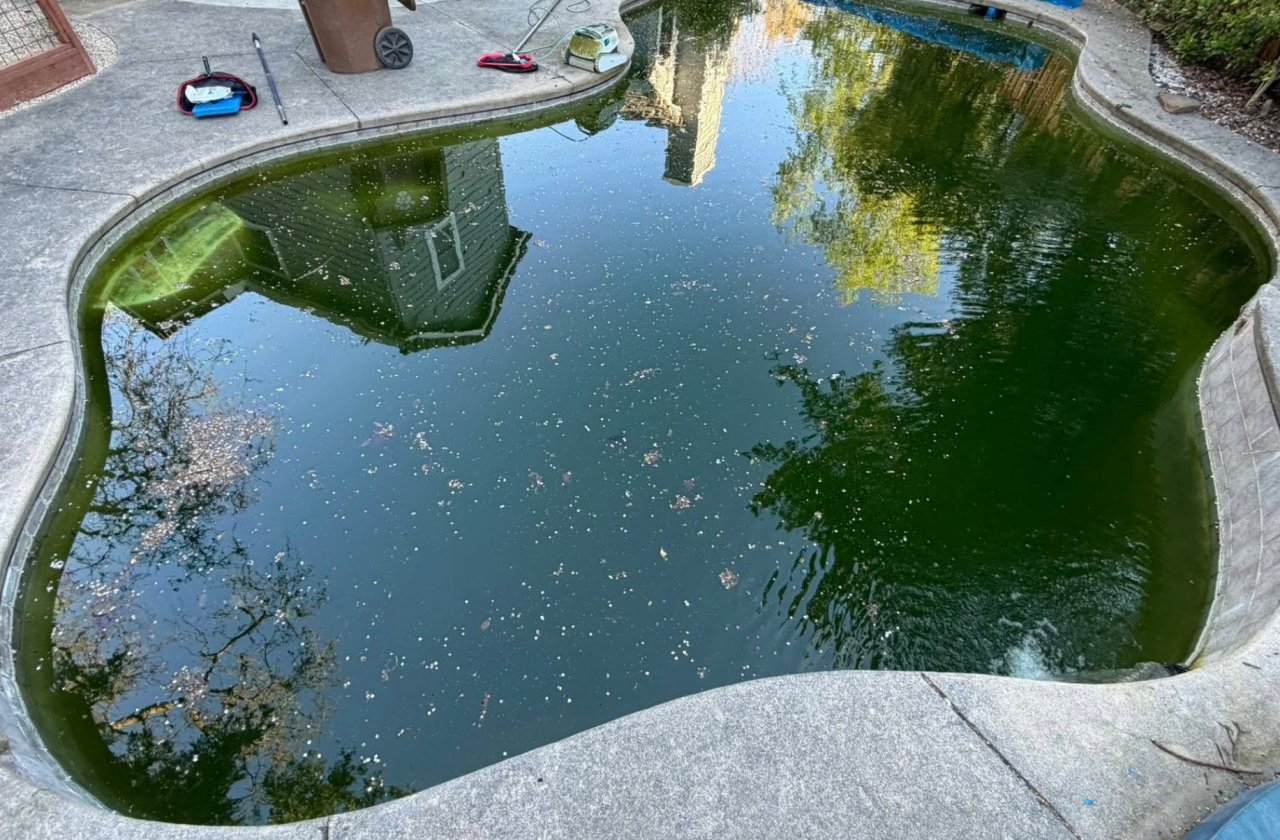
Green pool water is usually caused by algae growth.
I. Types of Pool Algae
Pool algae generally fall into three categories: green algae, mustard algae, and black algae.
The most common is green algae, which appears as a thick green soup floating on the water
surface or clinging to pool walls, making surfaces slippery.
II. Three Causes of Algae Growth
1. Sunlight exposure
Outdoor pools exposed to high temperatures and strong sunlight create conditions ideal for
algae and bacteria growth.
2. Carbon dioxide
Increased bacteria and organic matter cause dissolved oxygen levels to drop rapidly, creating
an oxygen-depleted or anaerobic environment that promotes algae reproduction.
3. Nutrients
Fallen leaves, dust, rainwater, and other organic debris enter outdoor pools, contaminating the water.
In indoor pools, high bather loads introduce sweat, oils, skin cells, cosmetics, and other nitrogen-rich substances
that feed algae.
Five Steps to Eliminate Algae
1. Algaecide treatment
First, add copper sulfate at 1–2 times the normal dosage. Under normal conditions, algae levels are low,
but when water turns green, algae are abundant, so a sufficient dose of algaecide (copper sulfate) is necessary.
After adding the algaecide, run the circulation system to ensure even distribution for maximum effectiveness.
2. Sanitization / disinfection
Approximately 2 hours after adding copper sulfate, add trichloroisocyanuric acid (TCCA) disinfectant at a rate
of 4 kg per 1,000 m³ of water (compared to the normal maintenance dose of 2 kg per 1,000 m³).
This is a shock treatment (superchlorination) that thoroughly disinfects the pool water.
3. pH adjustment
After about 2 hours, test the water pH. Following rainfall and the use of TCCA (pool disinfectant),
the pH level typically drops. Adjust accordingly.
4. Flocculation
In the evening, add a flocculant at 5–8 kg per 1,000 m³ of water. This will settle dead algae cells and
other suspended particles to the pool floor.
5. Vacuuming
Early the next morning, before pool use, use an automatic pool vacuum to remove the settled debris
from the bottom.
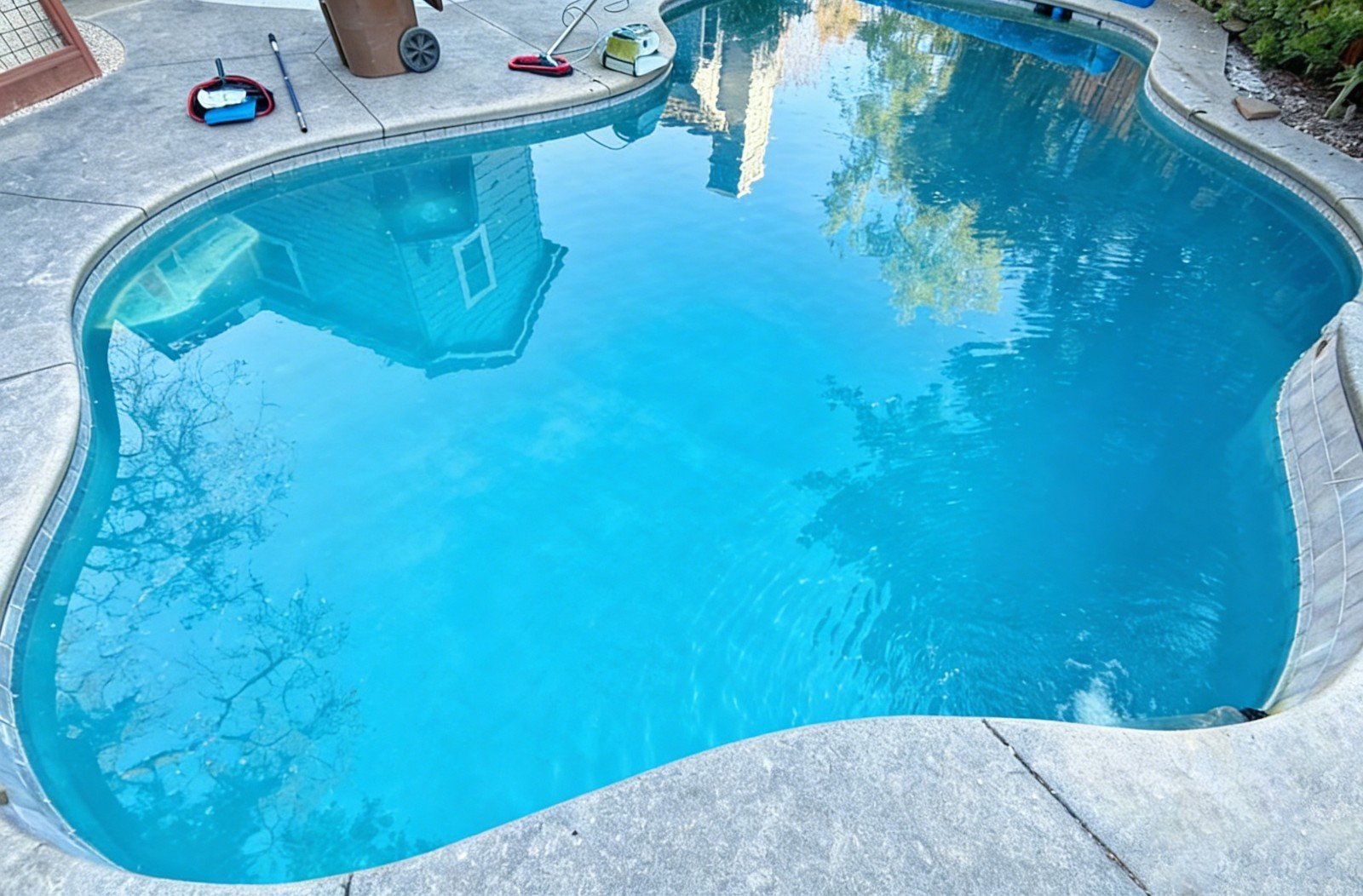
Following these five steps will restore clarity to the pool water.