Please fill this for and we'll get back to you as soon as possible!

A Technical Guide to Swimming Pool Disinfectant Tablets: Comparison of TCCA, SDIC, Calcium Hypochlorite, and BCDMH
Mainstream pool disinfectants fall into four categories: Trichloroisocyanuric Acid (TCCA), Sodium Dichloroisocyanurate (SDIC), Calcium Hypochlorite, and Bromochlorodimethylhydantoin (BCDMH, Bromine Tablets).
· Outdoor pools: TCCA slow-release tablets
· Indoor pools: SDIC fast-dissolving tablets
· Hot water pools (spas): BCDMH (Bromine) tablets
· Emergency shock treatment: High-concentration powder
---
I. Comparison of Main Disinfectant Tablets (Core Parameters)
1. Trichloroisocyanuric Acid (TCCA, Strong Chlorine Agent)
· Available Chlorine Content: 90% (High)
· pH: 2.5–2.9 (Acidic)
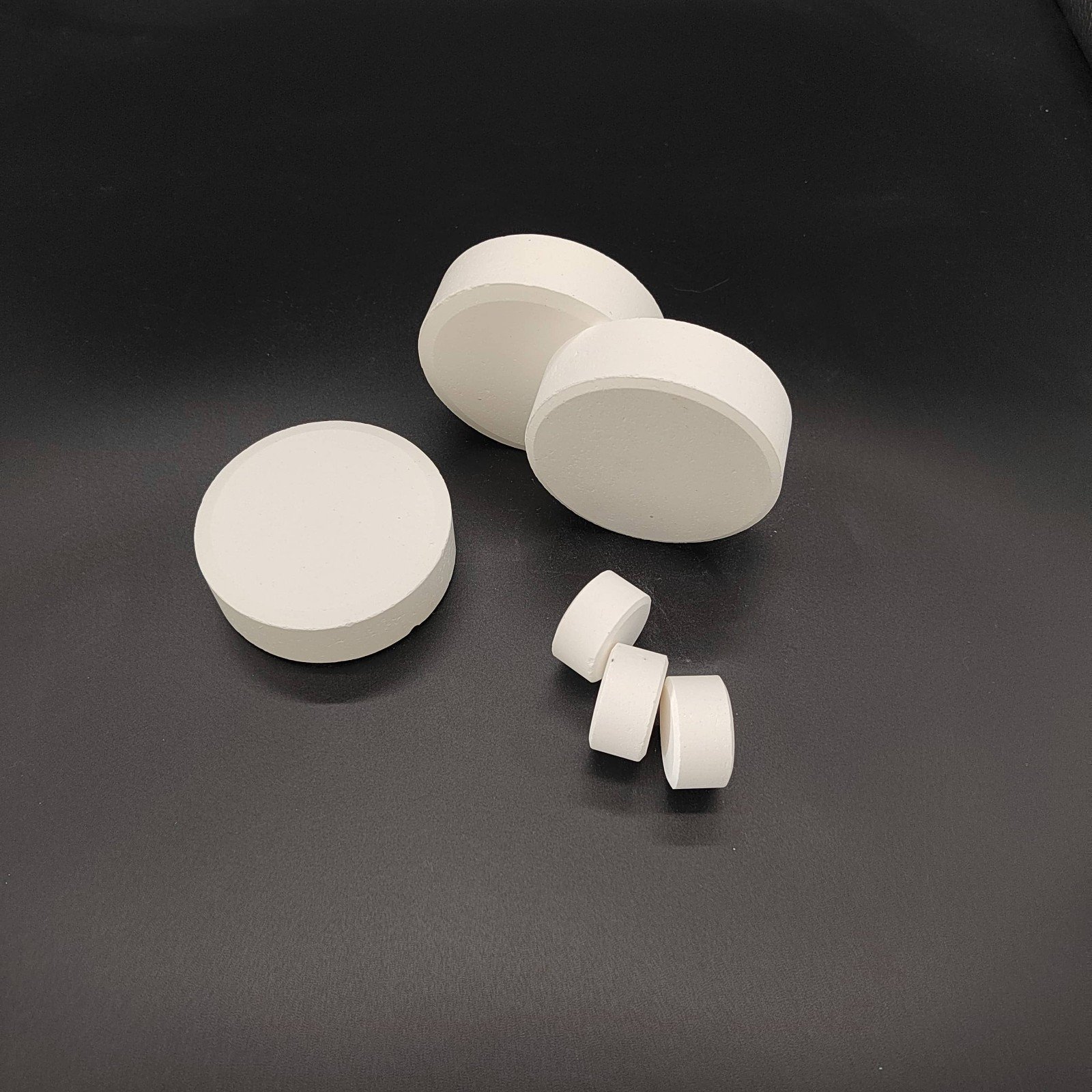
· Forms: 2g fast-dissolving tablets, 20g/200g slow-release tablets, granules, powder
· Characteristics: Contains a stabilizer (cyanuric acid), UV-resistant, first choice for outdoor pools; slow-release tablets provide long-lasting effect (3–7 days), fast-dissolving tablets for emergency use; long-term use will lower pH, requiring regular alkalinity adjustment.
· Applications: Outdoor pools, ornamental ponds, routine maintenance + shock chlorination.
2. Sodium Dichloroisocyanurate (SDIC, Sodium Dichlor)
· Available Chlorine Content: 56%–60% (Medium)
· pH: Neutral (≈7)
· Forms: 2g fast-dissolving tablets, granules, powder
· Characteristics: Rapid dissolution, minimal pH impact, low dust; no stabilizer, prone to photodegradation outdoors (requires supplemental stabilizer); low irritation, suitable for indoor/children's pools.
· Applications: Indoor pools, kiddie pools, thermal pools, routine maintenance.
3. Calcium Hypochlorite (Bleaching Powder / Calcium Hypo)
· Available Chlorine Content: 60%–70% (Medium-High)
· pH: 11–12 (Highly Alkaline)
· Forms: Tablets, powder
· Characteristics: Low cost, fast biocidal action; highly alkaline, significantly raises pH, requiring frequent acid addition; no stabilizer, degrades rapidly outdoors; corrosive, irritating to skin and mucous membranes.
· Applications: Temporary emergency use, old pools, low-cost scenarios (primarily indoor).
4. Bromochlorodimethylhydantoin (BCDMH, Bromine Tablets)
· Active Ingredients: Bromine + Chlorine
· pH: 2.8–3.0 (Acidic)
· Characteristics: Broad-spectrum biocidal activity, long-lasting, low irritation, temperature-resistant (up to 45°C/113°F); no chlorine odor, ideal for thermal pools/spas; higher cost, requires a specialized feeder.
· Applications: Thermal pools, spas, hot tubs, high-end swimming pools.
---
II. Selection Guidelines by Application Scenario
Outdoor Pools (High UV Exposure)
· First Choice: TCCA 200g slow-release tablets (90%) → Use with a floating dispenser or automatic feeder; add 1 tablet every 3–7 days to maintain stable residual chlorine and UV resistance.
· Backup: TCCA 2g fast-dissolving tablets → For shock treatment during rainy days, high bather loads, or algae blooms (green water) to rapidly raise chlorine levels.
Indoor Pools (No UV Exposure)
· First Choice: SDIC 2g fast-dissolving tablets (56%) → Add 1 tablet per 100 m³ daily; stable pH, no dust, low irritation.
· Alternative: TCCA slow-release tablets → Use when seeking long-lasting effect, but monitor pH carefully.
Kiddie Pools / Splash Pads
· First Choice: SDIC fast-dissolving tablets → Neutral pH, mild, low residue, minimal irritation to skin and eyes.
· Prohibited: Calcium hypochlorite (highly alkaline, highly irritating).
Thermal Pools / Spas (High Temperature)
· First Choice: BCDMH (Bromine) tablets → Temperature-resistant, no chlorine odor, persistent biocidal action, suitable for water around 40°C (104°F).
Emergency / Water Quality Deterioration (Green or Cloudy Water)
· First Choice: TCCA powder (90%) → Rapid dissolution, strong biocidal action; shock dose of 5–10 g/m³, effective within 1 hour.
---
III. Key Purchasing Criteria (Avoiding Common Pitfalls)
· Available Chlorine Content: TCCA ≥90%, SDIC ≥56%, Calcium Hypochlorite ≥60%. Adequate content ensures efficacy; low-cost, low-content products are ineffective.
· Stability (Cyanuric Acid Content): Outdoor pools must choose a product containing a stabilizer (TCCA); otherwise, 80% of chlorine will volatilize within one hour of sunlight exposure. Indoor pools may use unstabilized products (SDIC).
· pH Impact: For routine maintenance, prioritize neutral pH options (SDIC) to reduce chemical adjustment frequency. For long-term outdoor use, acidic options (TCCA) are suitable, but monitor pH regularly (maintain 7.2–7.8).
· Formulation & Application Method:
· Slow-release tablets (200g): Use with a floater or feeder; add once every 3–7 days; suitable for unattended operation.
· Fast-dissolving tablets (2g): Can be broadcast directly; effects seen the same day; suitable for daily or emergency use.
· Powder: Must be pre-dissolved before broadcasting to avoid undissolved solids burning the pool surface; suitable for shock treatment.
· Safety: Choose products from reputable manufacturers with quality inspection reports. Avoid mixing different types (e.g., TCCA + Calcium Hypochlorite can cause explosion). Store in a cool, dry place away from children.
---
IV. Recommended Dosing Protocol (Standard 100 m³ Pool)
· Routine Maintenance: TCCA 200g slow-release tablet, 1 tablet every 5 days (outdoor) OR SDIC 2g fast-dissolving tablet, 1 tablet per day (indoor).
· Weekly Shock Treatment: TCCA powder 500g (add in the evening, allow to circulate overnight).
· pH Control: Raise pH when using TCCA by adding sodium carbonate (soda ash). Lower pH when using calcium hypochlorite by adding hydrochloric acid (muriatic acid).
---
V. Common Misconceptions
· Focusing only on price: Low-content products (<50%) are cheap but ineffective, ultimately costing more.
· Using calcium hypochlorite outdoors: Lacks a stabilizer; chlorine will drop to zero within one hour of sunlight, inevitably leading to algae growth (green water).
· Mixing different disinfectant tablets: TCCA mixed with SDIC or calcium hypochlorite can generate toxic gases or even cause an explosion.
· Neglecting pH monitoring: Long-term use of TCCA lowers pH; below 7.0, it will corrode equipment and irritate skin.